Pages

Friday, January 3, 2014


Confession: sometimes I feel as though I deserve to be frustrated.
angry.
hurt.
confused.

I am a natural born sinner, and I know better than anyone my daily failings.  


I also know that the choices I make in this life I am living are never completely right or wrong. 
They are simply choices...

to make it through a day.
to care for someone in a different way.
to care for myself.
Choices made selfishly and greedily, and choices made because I am otherwise out of options.


I know very well that each and every one of the small hundreds of daily choices we make as humans effect us and those we love - not always either well or poorly, but in that same gray way that we don't always understand.  I can try my best to prepare myself for the reactions of others to my choices, but ultimately, I must stand by them knowing that I made them, and from that moment on my life is ultimately different.


But that is not part of my confession.  My children and my partner do not typically understand my choices.  I struggle to communicate clearly with all 3 of them what the needs of this family are and how difficult it is to be the only one who can see that choices aren't always right or wrong but varied in their shades of gray.  You know the ones - parenting, money, cleanliness, responsibility, time.  The choices made in any of those decisions are equivalent to Breaking Bad variations of gray.


Sometimes, the things I choose to benefit the family are misunderstood.  Sometimes they are just really poor choices.  Sometimes they are necessary.  Sometimes they are difficult, confusing, frustrating, or easy.  

So here I stand - confessing that I have made choices that aren't perfect, that don't always make sense, and that sometimes feel to others like I've chosen to be hurtful.   Sometimes knowingly, sometimes unbeknownst to me, always for the benefit of one or more of the four of us.


But then here is the Absolution:
I know what LOVE is.   I know that LOVE is with me, comforting me in my dismay of being misunderstood, consoling me in my anger when I'm not listened to, and compassionate when I make all manner of mistakes.  LOVE abides in me and offers herself to the family in and through and between all the choices we ALL make as a family.  LOVE is the glue that binds us together in a holy way.  LOVE is the solvent that removes the binding that anger, mistrust, frustration, and sorrow hold me in.  
LOVE wins. (even when it doesn't look like it.)


Wednesday, January 1, 2014

kindness

I have been busy.  Chaotic with less contentment for sure.  Though my internship sites are lovely and I'm truly enjoying every minute, I don't yet completely know how to juggle all the things I want to do.

I want to run races.
I want to make music.
I want to read more.
I want to enjoy the minutes while my kids are little.
I want to knit many lovely things.
I want to be more kind
and more present.

Most of all, I want to figure out how to do all these things without feeling guilty that I hadn't chosen differently in the moment.  I want to play with my kids, and not feel shame for not running.  I want to read a book and not feel guilty for having salad and PB&J's for dinner.  I want to experience freedom in enjoying my work and not criticize myself for being away from the family.  I want to love my partner and not look jealously at the 30 sweaters my knitting friends pump out every year.  

So my word for this year - my oneword365.com is kindness.  


I shall be kind to myself as I try to juggle and fail, when I can't put away the guilt I will smother it with self kindness.  Because while my life can be chaotic, I need to remember that I am blessed beyond compare, and that is enough to be content.  

I want to enjoy this year, and with great kindness (and a good calendar app), I believe I will.

Monday, November 4, 2013

vocation and formation

I have been deeply engaged in my internship(s) these last 2 months.  40 hours a week of (underpaid) ministry looks so much more like 60 hours a week, and while I enjoy most every minute of it, I have been reminded of late just how hard it is to be present to people and projects and family 60 hours a week.


At TLC, I get to teach a small cohort of a larger class of Freshman a course called "Vocation and Formation."  It is a class that provides mentorship and training for discernment, naming and telling your stories,  identifying ones call, holy listening, and how to ask self awakening questions of yourself and one another.  Basically, it's the coolest internship ever.  


 Last weekend, all 7 cohorts of the class gathered together for a retreat at Camp Lutherwood.  It was a holy time of formation, laughter, discernment, stories, and fun.  I was gifted the chance to plan and lead the closing ritual worship for the retreat.  We wandered through a 3 part ritual starting with listening/hearing your call, moving to claiming your call, and ending with serving as called.

It was my first time as a Sister guiding a community through a hand washing ritual.  I expected with 2 stations and 40 or so college students, we would buzz through the process rather swiftly - maybe 2 songs.  I was wrong.  It took 8 songs.  These students relished the chance to serve one another in this intimate, gentle, deliberate way.  The experience of looking one another in the eyes, pouring warm water over and through the fingers of another, drying them deliberately with a towel was almost too genuine to watch.  It was a deeply sacramental experience.

And I was challenged at this retreat to remember that I, too, as an intern, am to be experiencing a season of Vocation and Formation.  While I accompany these college students on their journey, they are also accompanying me on mine.  I am blessed by supervisors who get who I am and how I am called, and encourage me to be fully that.  As much as I can and should be using this space to dream and vision what I could do with and in my call, I also need to develop a discipline of presence and calm discernment. So now, 2 months in, I am challenged to be engaged in daily relationships, as well as building on the future, walking my kids to school without my iPhone email inbox in front of my face, and remembering the challenges associated with saying yes and the grace that comes from saying no.  
Many thanks to Sister Krista, Pr. Erik Samuelson, Ryan Marsh, and many others walking alongside me as I define my self, my vocation, my dreams, and God's vision for the kingdom of God.

Monday, August 5, 2013

Summer of Instagram

Summer has been a bit chaotic.


We started H in swim lessons. She's a little fish- loves it.


S is even more photogenic then his sister. My Instagram feed is full of this little charmer.


My internships are shaping up for the fall.


James has been working like crazy. A whirlwind summer for him. He gets to go visit his dad and work on the Tahoe cabin later this month. He deserves the break. Love that man.


Lots of Starbucks dates with my sweeties.


Braids for days ( and nights and overnights...).


This one does nothing the "normal" way. He perches on the arm of the sofa.


And loves cheering for his sisters swim lessons.


Cute boy in mamas shades.


I feel overwhelmed by the needs and whines of the kids but going through Instagram shows me they are pretty rad kids. Nice treat :)

- Posted using BlogPress from my iPhone

Monday, May 27, 2013

long time, no blog...

I'm tired.  In both the good and bad ways.  I am 2 weeks away from graduating from Seminary.  I don't have any major papers or assignments to get done, just 2 more small 1-2 pagers, and a few 1/2 page feedback forms.  Not too bad.  I might pick up one of my post-graduation books early.
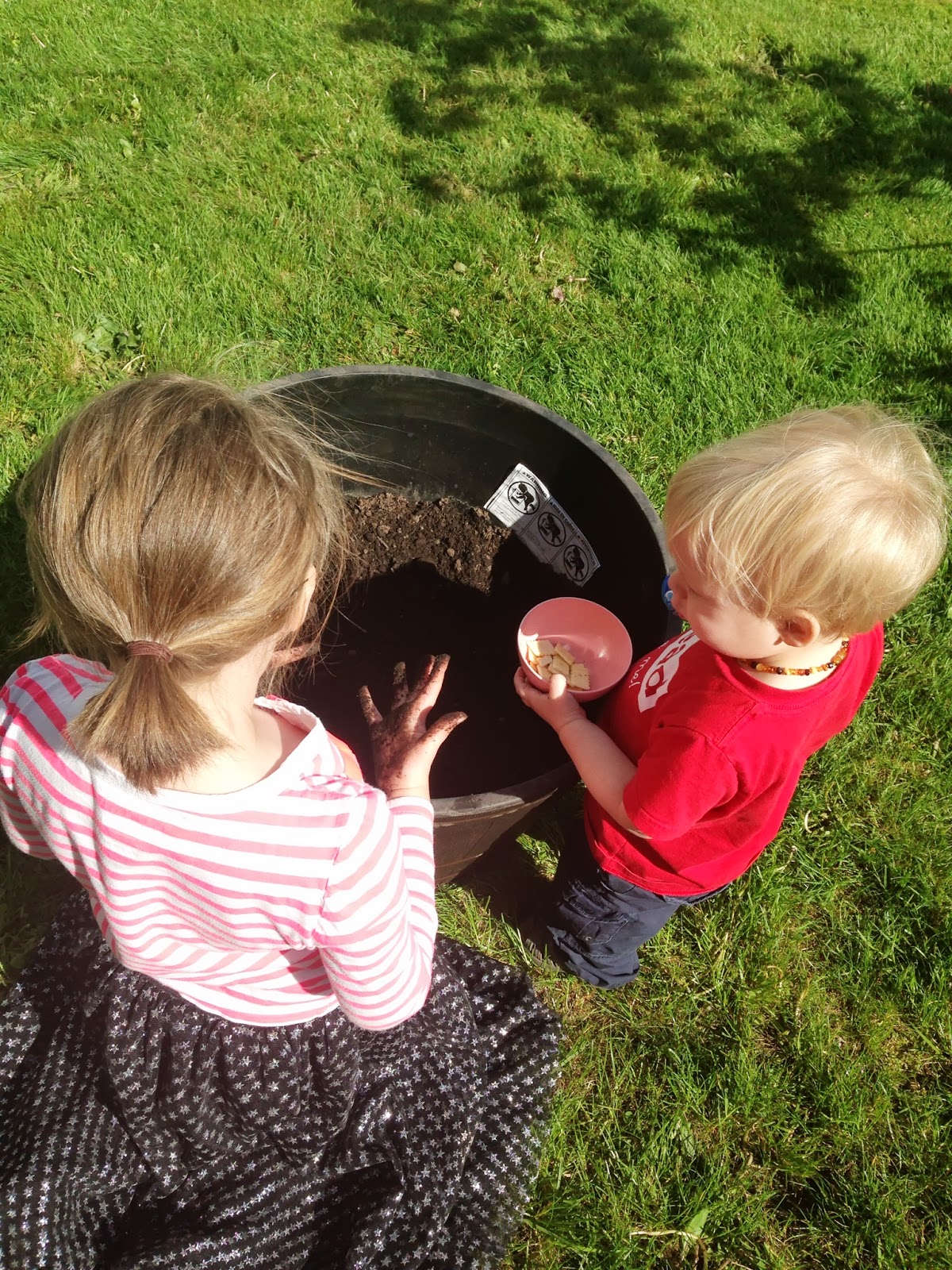
I'm tired because this little Tasmanian Devil is so.darn.fast.  and swiftly approaching 2 years old.  TWO.YEARS.OLD. I tell you.  He's fast, likes climbing, knows what he wants (yea, THAT!) and what he doesn't (NOooooooooooOOOooo!).  
But he's generally gentle, loving, a good listener, a kind friend, and a highly motivated learner.  
This one also can't get enough learning.  I swear, half of all my energy is spent trying to answer her 1,000 questions a day.  All good, insightful, deeply thoughtful and articulate questions, many of which are highly theological, but I don't always know how  to answer without stumping her or myself.  
These kids exhaust me.  
but in wonderful ways.
 And I know that these are the days that memories are made of, and my children will have wonderful memories, even if I am too tired to notice them in the midst of it all.
 But that is not the only reason I am exhausted.  I allow my body to fill up with anxiety when I am faced with unknowns.
 And I have many post-graduation unknowns to sort out.
 It's hard to feel tired and trust in the promises of God that offers to me.  I think the fact that I am an I on the Myers-Briggs has become more and more clear to me as I sort out my call to professional ministry.
 However, I am not afraid.  And I can get past the tired, if I can find a way to release the anxiety I place on myself.  These kids certainly help to put it in the back seat, at the very least.
Perhaps I will allow myself to enjoy these last few weeks before H is done with school for the summer, and learn to embrace the liminal state of my post-graduation, pre-internship, living.  Pray that it will be so, dear friends. 
 pray that it be so.
amen.

Monday, April 15, 2013

the kids are playing together in their rooms

In our school district, it is spring break.  James is out of town visiting some family.  This happened to be the weekend where I had hours-long obligations every single day, so the kids have been passed off on others so I can get some stuff done.  The first and best day so far was when Shepherd went to daycare and Hazel went on a special outing with our dear family friend Aubrey to the zoo and other adventures.
 As I prepare to graduate from my masters program, enter professional ministry, and begin paying down massive (theology and ministry) school loans, I find myself grappling with how will I feel most satisfied living out my call.
 So while the kids were playing together quietly in their rooms, I read through a few of my previous blog posts, and was reminded how much I enjoy writing, and how much it assists me in articulating what swirls around in my brain and heart at 300 mph.
 I have always enjoyed writing, and can't imagine that stopping.  But the idea that it is a processing tool for me is intriguing.  How might I allow this practice to help shape what I am called to do, and how might I keep this as a practice in wholeness for myself? 
 For also, when I write, the chaos temporarily subsides.  I feel secure in where I stand, hopeful about my direction, and ready to meet the challenges of professional ministry.
 When the kids come out of their playtime, one angry because the other scratched them, and complaining that someone else (certainly not them!) spilled an entire package of bubbles on the rug, the chaos will begin to restructure itself once again.
 But I might be more grounded because I took the time to write this out.  To process a few fleeting feelings.  To share them with the best friends an introvert theologian can - the internet, and I might be able to feel the contentment that can be my chaotic life.
For a few moments at least.

Tuesday, April 2, 2013

Final Christian Scriptures paper, for which I got 100%


Greetings Friends and Peers[i],
I have been called to write this to you as a way to convey how I, in community with you, can trust in the message of the Christian Scriptures.  Indeed, I feel a call to walk alongside you as a companion, a participant, and a gentle guide on your various and blessed spiritual journeys.  The reason and validity I feel for this call is rooted in my Christian faith and traditions.  However, this faith does not come from me alone, nor do my traditions simply get passed down through the institution of the church, but I am called by the Love of G-d through the Christian scriptures to be who and where I am.  I hope to share with you in this letter how that can be, and what I believe the core of the Christian scriptures is for me, and potentially for you.  There are large religious communities surrounding us that spend a significant amount of time proof texting scripture to say what they want it to.  But I believe that, when one is aware of the context of the message, the community being specifically addressed, and can adequately separate culture from gospel, there is an underlying message of loving relationships that can be gleaned from the entirety of the text.  The true core of the Bible is identity – the whole book is full of cultural stories of who we are in relationship to the Divine, and how we are able to relate to and claim what it means to love and be truly loved!
            A valuable and interesting thing to note when reading the Christian canonical Gospels is that the chronology of them changes the image or portrayal of Jesus as time goes on without Christ’s return.  Additionally, important to note is that these Gospels are not the literal truths of Jesus’ living, rather they are the stories of Jesus retold by people with a specific audience and agenda (similar to how I am writing you this letter!).  Mark, the oldest of the four Gospels, paints a picture of a very human Jesus, who felt pity, anger, wonder, love, compassion, and a limit to knowledge      [ii].  This detailed emotional expression of Jesus is Mark’s way of portraying that the Divine uses the ordinary for extraordinary things.  The human Jesus is baptized into his ministry to do miracles and challenge the status quo of the church.  And these miracles are all ways in which humanity is brought back into relationship with one another.  Matthew’s gospel portrays Jesus as fulfillment of Hebraic prophesy[iii].  Jesus becomes less human, and more a vessel for God’s validation of Jewish tradition, as well as a chance to reform it.  To Matthew, there was a very definitive split between the ways of God and the ways of the Pharisees.  Jesus was sent to be a mediator and a liberator of the Jewish traditions and faith. 
            Luke wrote a more historically directed account of Jesus’ life and ministry, as well as directly relating Christ to validating the oppressed and marginalized of his society.  Tax collectors[iv], Samaritans[v], and the relationships between rich and poor[vi] were vital to what Luke states as the Jesus’ mission: “The Spirit of our God is upon me;   because the Most High has anointed me to bring Good News to those who are poor.  God has sent me to proclaim liberty to those held captive, recovery of sight to those who are blind, and release to those in prison – to proclaim the year of our God’s favor[vii].”   John portrays Jesus’ as the Christ – filled with the Divine, and teaching God’s Love and truth.  His Christ is the image of God made flesh and continually present to us in the give of the Spirit[viii].  John is an important gospel because he relays the importance of the gift of the Holy Spirit, and that the nature of John’s message is that we are being called into relationship with one another, guided by the teaching of Jesus, and maintained by the gift of the Spirit, who relates truth to us even now[ix]. 
Chronologically, Paul wrote 7-8 letters before any of the Biblical Gospels were penned.   Paul had an urgency in what he felt was the core of Christianity in his time.  His truth was that Christ died, Christ was resurrected, and Christ was coming back soon[x].  To this core were Pauls instructions to the early Christians directed.  Because Jesus would be returning so quickly, it was important for people to be ready[xi], and for the message of Christ to be shared as widely as possible before that happened[xii].  Not much else mattered at first to Paul, other than relating this message to as many Gentiles as he possibly could.   He also greatly emphasized to his various communities the need to live lives that were uplifting to others, to live in peace with non-believers[xiii], to treat others with respect[xiv] bestowing kindness on one another[xv], and to be united in both conviction, love, and purpose as a community[xvi].
 His messages became more theological over time, since Christ did not, in fact, come back within the weeks or months Paul assumed at first.  Paul’s messages became more directed at how these communities were to relate to one another, to their contextual cultures, and still live in unity with the message of the gospel of Jesus.  He began developing a lived theology for the early Christians.  He addressed some of the realities associated with marriage[xvii], early body theology[xviii], and the humanity/divinity of Jesus[xix]. 
            However, here is where I believe Paul’s writings will become interesting to you (if they haven’t already!).  Paul writes of inclusivity, community, a largeness of salvation, the relationship of faith, hope, and love, and grace.  When we are able to recognize that culture plays a large role in the whys and hows of Paul’s letters, we are able to see that Paul’s Christianity is highly inclusive.   Now, everyone and anyone can enter the kingdom of God, people groups and genders[xx]!  Salvation was now communal[xxi].  And this inclusivity created a newly diverse community that needed to learn how to be in relationship with one another.   Paul taught about spiritual gifts and how they help a community function as a whole[xxii].  He later wrote, “but be careful in how you live out your freedom in Christ, serve one another in works of love, since the whole of the Law is summarized in a single command : love your neighbor as yourself[xxiii].” 
            Paul’s later letter to the Romans in brilliantly inclusive, as well as formative for a living faith.  His message is that God’s promises are forever – God’s promises to the Jewish community do not die in Christ, but are forever, and that they are marked on our hearts as a blessing.   When we take the chance to follow the spirit (our spirits), and not worry about the letter of the Law, we are freed to seek the praises of God and not humankind[xxiv].  There is a freedom and flexibility in this theology that appeals to all humanity.  For me, I see it as an opportunity to trust my God given/God inspired gut intuition to be that which can call and motivate me to community and love and relationship with God, self, and others.  This existed before, but was able to be received in a more tangible way in the gift of Christ.  We are reminded by Paul that everyone falls short of that which we are capable of reaching, but it is through the grace of God in the gift of Christ that we are able to do anything valuable for our communities without our own desires clouding the whole exchange[xxv].  He gives us an insightful list of values to use in the midst of community living that remind us to love, be respectful, bless others, be hospitable with your resources, meet people in their emotions, be at peace, and overcome evil[xxvi].  And he calls us to allow the happiness of others to make us happy, and the pain of others to bring us grief[xxvii].
            Therefore, my brothers and sisters, I challenge you to look at the Christian Scriptures in their context and take them and their cultural significance with the grain of salt so many of our religious traditions refuse to do.  When so much of the writings seem to be in conflict, now we might be able to recognize that it is not the scripture that is paradoxical, it is the cultural context.  Therefore, we may attempt to live into the spirituality that comes from our God-imaged selves, and take heed of what the Christian scriptures have to say to us now about relationships with one another and with the Divine.  One message I hear loud and clearly from Paul’s letters is that our spirituality that we claim as individual and personal is not necessarily something that comes from us, but is truly something that comes from and grows out of the nature of community and our relationships.  For God is present to us in and through all of our interactions with one another and the created world, connecting us to one another.  This, to me, implies that there is a resonance to the stories our ancestors share with us in the Scriptures, and we can bond to their experience without owning the condemnation or cultural teachings explicit to that context. 
I believe that the core message of the Christian scriptures to us today is that relationships are more than the people we know or the families we come from, but are also the efforts we use to cultivate a connectivity to our greater world, communities, and selves.  If we truly believe that our spirituality is that which binds us to the people around us, then the experience of participation in a religious institution can give us both the language to own that, and a place to challenge potential stagnation of our corporate spirituality. The identity we are able to discover for ourselves through these somewhat coded yet living pages of the scriptures is that we are loved beyond belief, beyond imagination, beyond understanding, and beyond boarders imaginary and drawn in the sand.  Whatever the Divine is for you, if you can believe that Jesus was a model of love for neighbor, an example of a champion of equal liberation, and a person who can tie you into the greater community of people striving for a more just humanity, then the core message of the Christian scriptures is valid and living for you.  May you never stop seeking, and trusting the intuition that draws you into loving relationships and challenging questions.
Your sister in Spirit and Truth,
Liz


[i] The demographic I have chosen to address is the Pacific Northwest community that claims they are spiritual but not religious.  I feel a strong sense of call to work in the long term with this community, and I am already quite involved in specifically young adult dialogue around spirituality.
[ii] Mark 1:41; Mk 3:5; Mk 6:6; Mk 6:34; Mk 13:32(The Inclusive Bible: the First Egalitarian Version – all references from this translation)
[iii]11 prophetic fulfillments are mentioned throughout Matthew’s gospel: Mt 1:22-23; 2:5-6; 2:15; 2:17-18; 2:23;4:14-16; 8:17; 12:17-21; 13:14-15; 21:4-5; 27:9-10
[iv] Lk. 19:2-6
[v] Lk. 10:29-37; 17:11-19
[vi] Lk. 12:16-21
[vii] Lk. 4:18-19
[viii] Jn. 20:22
[ix] Jn. 14:25-26; 16:13
[x] 1 Thessalonians 4:13-16
[xi] 1 Thess. 5:1-3
[xii] 1 Thess. 5:14-15
[xiii] 1 Corinthians 7:15
[xiv] Colossians 3:18-4:1
[xv] Philemon 13
[xvi] Philippians 2:2
[xvii] 1 Corinthians 7
[xviii] 1 Corinthians 3:16-17
[xix] Philippians 2:6-11
[xx] Galatians 3:28
[xxi] Galatians 2:16
[xxii] 1 Corinthians 12:4-7, 27-31
[xxiii] Gal 5:13-14
[xxiv] Romans 2:29
[xxv] Romans 3:22-23
[xxvi] Romans 12:9-21
[xxvii] 2 Corinthians 2:2